Vietnam’s retail is growing fast, and growth is a big operational headache for brands: too much volume, too many channels, not enough control. The online retail market in Vietnam hit $25 billion in 2024, and a subsequent government-linked report suggests it’s likely to exceed $40 billion with 20% to 25% annual growth, making Vietnam one of the fastest-growing online retail markets in the world. Alongside this, social commerce is taking off, with Vietnam’s social commerce market set to be worth $5 billion in 2025.
This sounds like fantastic news for retailers and consumer brands. And in some respects, it is. However, there’s a flip side. The growing adoption of multiple ways to shop (on marketplaces, social sites, directly on brand websites, via chat, and in physical stores) means the journey from order placement to receiving and possibly returning products has become disconnected. You might have stock in one place and see demand surge in another. You might have placed an order via one channel and need to initiate a refund via another. Your marketing team might drive lots of demand, but your operations teams can’t deliver on it accurately or efficiently. This is fast becoming the number one retail issue in Vietnam and is being addressed with an order management system.
Vietnam’s retail challenge is no longer demand. It is execution.
The challenge used to be acquiring customers; today it’s serving them efficiently after they click. Consumers complaining during Jan-Sep 2025 for Vietnamese e-commerce largely centred on refunds, wrong items/delayed delivery, and difficulties regarding exchanges and returns. Vietnam’s consumer authority referred to these complaints as being structural.
This is important; customer expectations are increasing, but tolerance is decreasing. For Tet 2025, NielsenIQ pointed out that Vietnam’s most important retail season accounted for about 20% of annual FMCG value, but customer behaviours were becoming more complex. Consumers were more price-sensitive, purchase channels were changing, and brands that delivered top performance relied on data-led accuracy more than broad promotional campaigns alone.
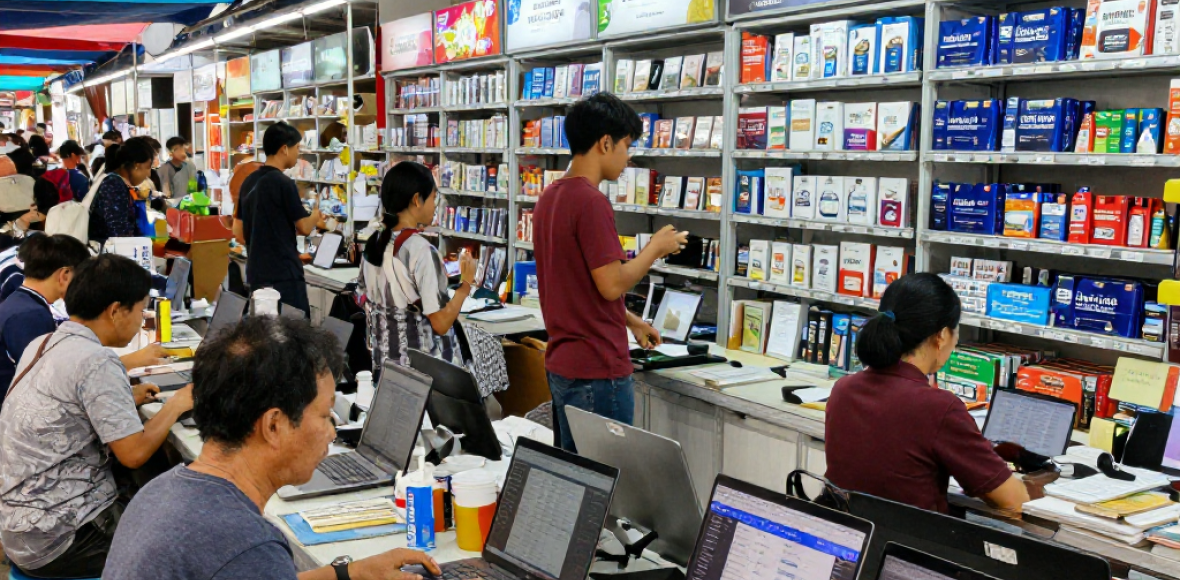
In practice, most Vietnamese retailers and brands have five or more places selling their goods at any one time—including their stores, their website, marketplaces, social selling sites, and their own distribution networks. This fragmented picture leads to confused orders, redundant inventory counts, slow delivery status updates, and inconsistent customer communication. What seems to be “omnichannel” from the front end without ordered orchestration becomes siloed, leading to cancelled orders, overselling, slower refunds, and reduced margins. This is precisely where order management software becomes a competitive asset rather than a back-office system.
Why an order management system fits the Vietnam market now
Vietnam is now in a position where channel growth is outpacing operational maturity. Official reports indicate that online retail alone constitutes nearly 9%-10% of total retail & consumer services turnover, while public and private sector analyses highlight rapid growth in social selling, increased marketplace competition, and logistical complexity, in parallel with a new ecommerce legal framework, adding more pressure to be a better organized company.
Order management brings a layer of control to disparate sales channels. From there it accepts orders, matches inventory logic, sends them to the most efficient fulfilment points, and tracks the entire order through delivery and even into post-purchase returns or refunds.
This helps retailers in Vietnam solve the core issue of getting things right in an era where growth and speed, rather than customers, is becoming an overwhelming issue on the front lines, and where the majority of customer issues revolve around the post-purchase stage.
How an order management system solves the problem
The advantages of an order management system:
- Real-time inventory: Brands know stock levels across warehouses, physical stores, and third-party fulfilment centres in a single source of truth, eliminating overselling and duplication while allowing accurate delivery promises.
- Smart order routing: An order can be sent to the most efficient fulfilment point based on inventory availability, speed, location, and cost, helping brands respond to logistical challenges without manual intervention.
- Returns and refunds: The number one complaint for Vietnamese ecommerce consumers in 2025 centred on refunds and returns. An order management system offers standard procedures and workflows for managing returns, connecting them with payments and customer service.
- Peak season preparedness: Suddenly amplified customer demand during the likes of Tet, large-scale promotions, and other sales events can strain retail backend processes to breaking point. The system helps pre-allocate stock, prioritize orders, and manage issues before they’re customer-facing.
- Improved customer experience: Customers only see what they expect in terms of delivery and service quality; an order management system offers a complete and consistent view of customer transactions and the ability to manage these to high expectations.
What Vietnamese brands should do next
The message for Vietnam retailers and brands is clear: don’t view the order management system as a back-office system. View it as a system that drives growth. Start by looking at where and how products are sold, where stock is located, and where the biggest pains exist post-purchase. Then look to the specific system functionalities that can help in the Vietnam market, such as integration with online marketplaces, the ability to process social selling transactions, returns workflows, and customer communication capabilities.
Winning the battle for customers in Vietnam will no longer be solely about generating traffic but about having the ability to process, deliver, refund, and retain them with accuracy and efficiency. Operational excellence is now part of the brand promise in a market with such dynamic growth, and it is the order management system that enables this by transforming retail growth into profitable expansion.
« Navigating Permanent Instability: How a Modern Transport Management System Tames Network ComplexityWarehouse Management System: A Complete Guide to Smarter, Faster and More Efficient Warehousing »