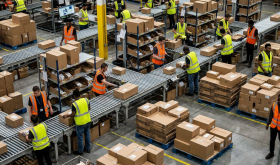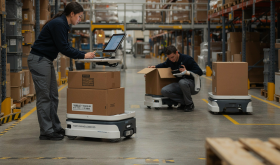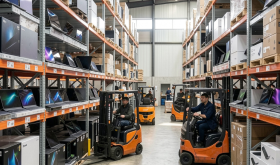

In the current business world, which is quite competitive and operates at a faster pace than before, efficient warehousing has become an important consideration when it comes to the success of supply chain management. With the rising demands from customers and increasing volumes of orders, the need for accurate inventory management, quick order fulfilment, and cost management is on the rise. Here is where a warehouse management system becomes important.
A warehouse management system is a technologically driven solution that ensures smooth management of warehouse operations, efficient inventory management, and better logistics operations. In terms of receiving goods and storing inventory to order picking, packing, and shipment, a warehouse management system gives businesses the tools to ensure efficient management of their warehouse operations.
What is a warehouse management system?
A warehouse management system refers to software that helps organisations in managing their day-to-day activities in the warehouse. This is an application that provides support to organisations in inventory management, storage management, workforce management, and order fulfilment.
The use of a warehouse management system gives businesses the ability to monitor inventory, warehouse space, and operations in real time through the automation of some of the processes.
In both the case of a single warehouse or a network of warehouses and distribution centres, warehouse management system solutions help organisations run more effectively.
The Importance of Warehouse Management in Modern Supply Chains
Modern warehouses are not only storage facilities. They became important centres that influence the customer experience and supply chain efficiency.
The lack of a proper warehouse management solution usually results in problems like
- Mistakes in inventories
- Tardiness in order fulfilment
- Unnecessary excess or shortage of stock
- High operational costs
- Inefficiency in using warehouse space
- Lack of information about movements of the inventories
- Less control over possible human mistakes
With the help of a warehouse management system, these difficulties may be solved with the help of data provided and automated processes.
Key Features of a Warehouse Management System
1. Real-Time Inventory Tracking
Modern warehouses are not only storage facilities. They became important centres that influence the customer experience and supply chain efficiency.
The lack of a proper warehouse management solution usually results in problems like
- Mistakes in inventories
- Tardiness in order fulfilment
- Unnecessary excess or shortage of stock
- High operational costs
- Inefficiency in using warehouse space
- Lack of information about movements of the inventories
- Less control over possible human mistakes
With the help of a warehouse management system, these difficulties may be solved with the help of data provided and automated processes.
2. Optimised Storage and Space Utilisation
The warehouse space is one of the most expensive resources for a company. The warehouse management system provides possibilities to optimize the warehouse space and assign the inventories to the right places.
After analysing the dimensions, demand rate, and other peculiarities of the items, the system suggests the optimal strategy of their storing, which ensures better accessibility and less movement in the warehouse.
3. Efficient Receiving and Putaway Processes
Receiving is a crucial component for the warehouse’s precision and success. A warehouse management system enables better receiving by automating receiving procedures and verifying incoming shipments according to purchase orders.
The next step would be moving the received goods into the most suitable storage places.
This helps to avoid delays, increases productivity, and keeps the inventory records accurate right from the beginning of goods’ placement in the warehouse.
4. Automated Picking and Packing
The efficiency of the order fulfilment process has a direct effect on the level of customer satisfaction. A warehouse management system facilitates picking operations and assigns tasks to pickers in such a way that their travel times are shortened and their productivity is increased. A warehouse management system can perform such operations as the following:
- Wave picking
- Batch picking
- Zone picking
- Pick-to-light systems
- Mobile picking applications
These features make warehouse workers capable of picking orders faster and with fewer mistakes made. Packing operations can be performed automatically, making sure that all the right items, packages, and shipping labels are packed in each order.
5. Shipment and Logistics Coordination
A warehouse management system is a key part of the process of managing the shipment processes in a company. It coordinates the shipping operations and integrates with transportation systems.
With a warehouse management system, companies can:
- Plan the shipments effectively
- Create the necessary shipping documents
- Manage shipment dispatches
- Monitor delivery performance
- Conduct carrier management more effectively
Benefits of Implementing a Warehouse Management System
- Increased Inventory Accuracy
Inventory accuracy is an important factor of effective supply chain management. Due to the warehouse management system implementation, there is less manual data entry and automatic stock update. Consequently, the level of inventory accuracy increases.
Better inventory accuracy allows companies to avoid stockouts, prevent overstock situations, and plan inventories better.
- Improved Operational Efficiency
Many warehouse activities, such as receiving, picking, packing, and shipping orders, become more efficient due to automation.
As a consequence, warehouse workers are able to process more orders per time period without increasing labour costs significantly.
- Enhanced Customer Satisfaction
The clients require accurate and fast order fulfilment. The warehouse management system allows businesses to increase order accuracy and speed of their fulfilment.
Therefore, the number of returns becomes lower, client experience improves, and the level of brand loyalty increases.
- Reduced Operational Costs
Inefficiency in warehouses leads to higher labour, inventory, and transportation costs.
The WMS allows organisations to reduce costs through:
- Increasing labour productivity
- Optimising inventory levels
- Effective using of warehouse space
- Decreasing order fulfilment errors
- Simplifying processes of order handling
All of these factors allow for the creation of a more efficient warehouse system.
- Better Decision-Making Through Data and Analytics
The modern warehouse management systems have comprehensive dashboards and reporting features that give important insights into warehouse performance.
It is possible to track different KPIs, including:
- Inventory turnover rate
- Picking accuracy
- Order fulfilment rate
- Warehouse productivity
- Utilization of warehouse space
- Shipping performance
and many others.
The Role of Warehouse Management System in Logistics Optimisation
The processes within the warehouse and logistics are related since any problems in the warehouse may lead to a delay in logistics. The purpose of a warehouse management system is to facilitate logistics because products will be ready to go at the time they are needed.
An integration of a warehouse management system with other systems, such as TMS, ERP, and SCM systems, ensures that products in a warehouse are visible and accessible to the rest of the supply chain. This way, there will be an efficient and coordinated logistics process with fast deliveries and proper product distribution.
Future Trends in Warehouse Management Systems
In times of digitalisation of supply chains, warehouse management systems continue to develop due to the emergence of new technologies.
Among the trends that affect the development of warehouse management systems one can find:
- Artificial Intelligence (AI) – demand forecasting and inventory management;
- Machine Learning—predictive warehouse operations;
- Robotics and automation – product picking and material handling;
- Internet of Things (IoT) – asset tracking;
- Cloud-based warehouse management system – scalability and easy access;
- Analytics and Dashboards – operation visibility.
These developments allow businesses to make smarter and more responsive warehouses.
Conclusion
A warehouse management system is not an additional system anymore but a crucial tool in order to enhance the efficiency of a business. Warehouse management systems help companies automate their processes and reduce costs. With the use of a warehouse management system, businesses can provide their customers with excellent service by being able to track all the processes within a warehouse and managing them efficiently.
« What Is a Transport Management System (TMS)? The Complete Guide to Logistics OptimisationOrder Management Systems Defined: What Is an OMS? »