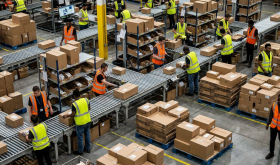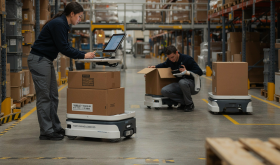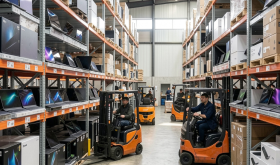
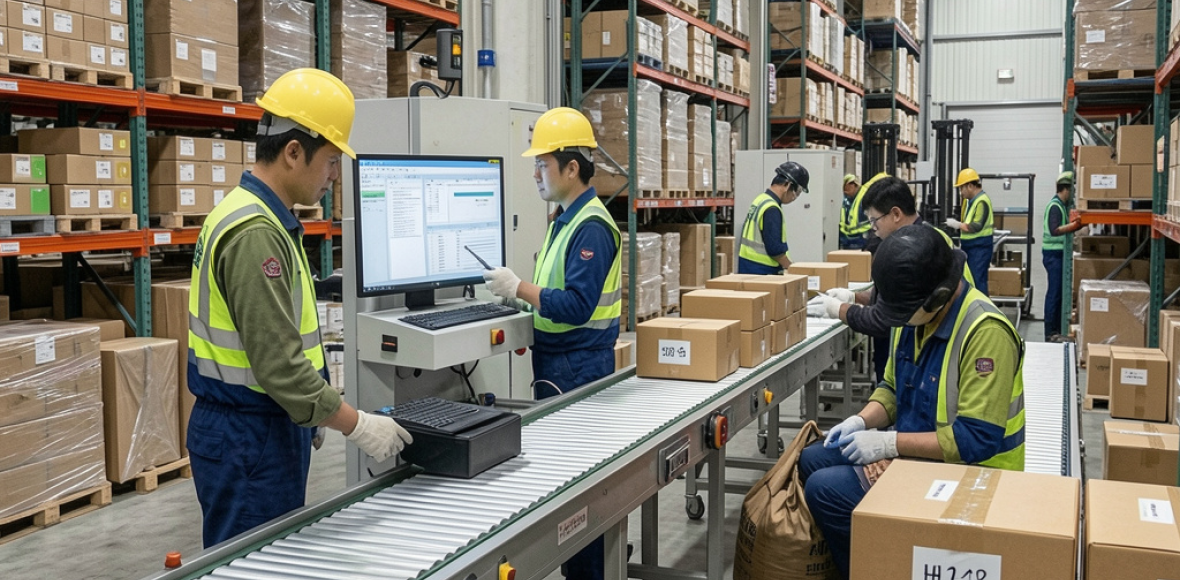
A modern warehouse is not only a storage facility—it’s the high-stakes heart of the world’s supply chain. Over the past few years, a massive structural shift has necessitated that businesses re-architect how they store and move their inventory. Fuelled by the skyrocketing growth of direct-to-consumer (D2C) e-commerce, traditional businesses were forced to quickly shift from existing brick-and-mortar business models to dynamic, omnichannel operations.
Today’s fulfilment operations need to accommodate both traditional bulk retail shipments and single-item residential deliveries, oftentimes from the very same inventory pool. This presents a significant logistics challenge: managing an extremely volatile order volume in a labour-scarce warehouse environment with continually shortening delivery times.
To adapt to this incredibly complex world, paper pick lists, basic spreadsheets, and the stagnant inventory tracking features built into outdated ERP systems will no longer suffice. Operating in an omnichannel environment requires a robust digital infrastructure: an intelligent warehouse management system.
The Core Challenge: The Omnichannel Sorting Nightmare
If your distribution centre tries to accommodate multichannel demand with fragmented and manual processes, efficiency will plummet. Managing traditional pallet shipments alongside thousands of sporadic, single-item e-commerce orders will overload outdated infrastructure to its limit.
┌──> Retail Pallets (Scheduled, Predictable)
[Unified Inventory]
└──> B2C Single Items (High Volume, Instant Turnaround)
│
└──> Problem: Picker Fatigue, Bottlenecks, Misplaced Stock
If you lack unified software to coordinate operations within the warehouse floor, several common problems will immediately arise:
- Inventory Misallocation: Stock may be erroneously allocated to wholesale accounts at times when you desperately need it to fill orders coming through your online channels, causing stockouts and cancellations.
- Inefficient Picking Paths: Workers spend wasted time traversing disparate areas of the warehouse while picking items—low-velocity products may be intermingled with high-demand goods.
- Inaccurate Order Packing: The wrong items, colours, or quantities may be packed into boxes for shipping, increasing expensive returns and reverse logistics processing.
When combined, these issues lead to significant order fulfilment delays and directly erode thin profit margins. Moving from an outdated, manual system to a reactive model to a proactive system guided by real-time data and intelligent algorithms will ultimately require a modern warehouse maangement system.
How a Warehouse Management System Maximises Warehouse Efficiency
A dedicated warehouse management system functions as the control centre for your fulfilment centre. When integrated with your ERP and e-commerce storefronts, a warehouse management system transforms incoming order data into optimized, real-time directives for the warehouse team.
┌──> Dynamic Slotting Optimisation
│
[Central WMS Core Engine] ┼──> Intelligent Batch & Cluster Picking
│
└──> Directed Putaway & Instant Visibility
- Dynamic Slotting and Intelligent Space Optimisation
A warehouse management system utilises data regarding seasonal velocity to dynamically reorganize the product placement throughout your warehouse. Instead of storing high-volume items in the back of your warehouse, the system will recommend that these products be moved to picking faces closer to packing stations. This will decrease worker travel time and floor traffic, as well as increase the number of items picked per hour.
- Algorithmic Picking Strategies (Batch, Cluster, and Wave)
Sending a warehouse worker out to pick a single e-commerce order at a time can waste time and resources. An intelligent warehouse management system solves this by aggregating large quantities of orders and grouping them into logical waves, batches, or clusters.
- Batch Picking: Allows one warehouse employee to pick an identical item for many orders on one trip.
- Cluster Picking: Instructs one employee to pick items for multiple individual orders and to place them in separate, color-coded totes on the same cart.
By automatically determining the most efficient pick path on the warehouse floor, a warehouse management system minimises wasted employee time and dramatically increases picks per hour.
- Directed Putaway and Real-time Visibility
When a shipment of incoming goods is received at your dock door, warehouse employees should not have to make decisions about where those items will be stored. A warehouse management system scans the item’s barcode and determines the most optimal place to put it based on dimensions, weight, hazardous material classification, sales velocity, and other factors. As soon as an item has been put away, the system updates itself to reflect that it is available. Customer service agents and buyers have a real-time understanding of available stock levels across the enterprise.
Quantifying the Financial and Operational Impact
A dedicated warehouse management system has a quantifiable positive impact on many operational Key Performance Indicators (KPIs):
| Warehouse KPI | Legacy / Manual Management | Optimized WMS Performance |
| Inventory Accuracy | 90% to 95% (Prone to human entry errors) | 99.9%+ accuracy via serialized barcode scanning. |
| Order Picking Accuracy | Frequent mistakes, leading to high return volumes. | Near-zero mispicks with automated verification steps. |
| Order Cycle Time | Hours or days to clear high-volume waves. | Minutes from digital order drop to labeled shipping box. |
| Dock-to-Stock Time | 24 to 48 hours for inventory to appear online. | Less than 2 hours with directed, system-guided putaway. |
The True Cost of an Error: Statistics show that the cost of a picking error, including return freight and warehouse labour to reprocess the item and the replacement product, is more than $50 to $100 per incident. Since barcode scans at the packing station prevent mistakes, the warehouse management system safeguards your profit.
Essential Capabilities to Look For in a Next-Generation Warehouse Management System
If your business is in the process of selecting a warehouse management system to cope with the challenges of modern distribution, look for a system that includes the following advanced features:
- Cloud-Native SaaS Architecture: The cloud removes the overhead associated with managing and maintaining servers in-house. SaaS warehouse management systems allow for automatic software updates and scalability to meet demand fluctuations during high seasons.
- Seamless Integration with Automation (WES/WCS): As autonomous mobile robots, automated guided vehicles, and smart conveyors are implemented in warehouses worldwide, your warehouse management system needs to be able to communicate with these devices. An open system that can integrate with a Warehouse Execution System (WES) is crucial.
- Intuitive Mobile User Interfaces: Given the high rate of labour turnover within the logistics industry, training new warehouse associates must be streamlined. Simple graphical interfaces on smartphones or RF scanners will guide employees efficiently through the entire warehouse picking process in a matter of minutes, not weeks.
- Value-Added Services (VAS) Capabilities: In today’s omni-channel environment, managing unique packing, assembly, kitting, and retail tagging services at the picking or packing stage is often critical. Your warehouse management system must allow you to streamline these services.
Conclusion: Turning Your Warehouse into a Growth Driver
The move towards multi-channel commerce is likely to continue at a rapid pace. As consumer demands for delivery speeds grow ever more pressing, your fulfilment operations will become an increasingly critical factor in your customer loyalty and brand reputation.
By implementing a modern warehouse management system, you eliminate inefficient operational blind spots, increase warehouse productivity, and restore control of your profit margins. An intelligent warehouse management system transforms your warehouse from a simple storage facility into a proactive, agile fulfilment centre that is ready to handle the future of consumer demand.
« Why a Transport Management System Is Critical for Southeast Asia’s Cross-Border E-Commerce BoomNavigating Permanent Instability: How a Modern Transport Management System Tames Network Complexity »