Having an efficient warehouse operation is critical for businesses. Whether you have a small distribution centre, a growing e-commerce operation, or a large logistics operation, having an accurate and timely process in place for inventory management and order fulfilment can be challenging.
As order volumes grow and supply chains become more complex, traditional methods of managing your warehouse (including spreadsheets and manual systems) may be inefficient.
What to look for in a WMS
Selecting the right warehouse management system can give your business many benefits, including improved efficiency, visibility into inventory, reduced errors, and optimised warehouse resources. However, there are many options available, so care must be taken to match the WMS functionality to your business requirements.
In this article, we have identified 10 key factors to look for in a warehouse management system and explain how selecting the correct system can improve operational efficiencies and drive business growth.
What is a Warehouse Management System?
Warehouse Management Systems allow businesses to manage operations within their warehouse efficiently. They allow for accurate management of goods, including receiving, storage, picking, packing, and delivering.
Compared to basic inventory systems, WMS’s include processes to manage goods within the warehouse itself.
Efficient WMS systems allow businesses to manage inventory, warehouse space, staff productivity, and order fulfilment effectively.
By linking warehouse operations with business systems, businesses can make more informed decisions, increase efficiency, and adapt quickly to changing customer requirements.
Top 10 Features to Look Out For in a Warehouse Management System
- Real-Time Inventory Visibility and Tracking
Having accurate inventory data within your warehouse is fundamental to efficient warehouse operations.
If inventory cannot be tracked effectively within the warehouse, stock inaccuracies may occur. This can lead to excess ordering, late delivery times, and customer dissatisfaction.
A reliable warehouse management system should allow accurate real-time data on inventory levels, location, and movement within the warehouse.
Consider if the warehouse management system can do the following:
- Real-time tracking of inventory levels and availability
- Barcoding/RFID capability
- Batch, lot, and serial tracking
- Automated inventory updates at receipt and dispatch
- Multi-warehouse inventory visibility
With accurate inventory data, businesses can reduce errors, make more informed ordering decisions, and have more control over warehouse operations.
- Efficient Order Picking, Packing and Fulfilment
Order fulfilment within your warehouse has a direct impact on customer satisfaction. Particularly within industries where speed and accuracy are key.
Manual order picking processes may cause incorrect items to be picked, unnecessary walking, and increased processing times.
In order to make order fulfilment efficient, a modern warehouse management system should have processes in place to increase accuracy and reduce effort in order processing.
Consider if the warehouse management system can do the following:
- Batch, wave, and zone picking
- Optimised picking routes
- Automated task assignment
- Barcode order verification
- Packing instructions and confirmation
These features mean warehouse staff will be able to fulfil orders consistently, reduce error rates, and deliver faster.
For businesses with high order volumes, efficient order fulfilment can be a key competitive advantage.
- Seamless Integration with Existing Business Systems
Your warehouse operations will be closely linked to other areas of your business.
Inventory movement can impact purchasing, sales, finance, transport and customer services. It is important to select a warehouse mangement system that can be integrated to existing systems in order to maximise efficiency.
Ideally your warehouse management system should integrate with:
- Enterprise Resource Planning (ERP)
- Order Management Systems (OMS)
- Transportation Management Systems (TMS)
- Ecommerce
- Finance systems
For example, integrating WMS with ERP systems will allow inventory and order data to be passed between warehouse and business planning.
A robust integration will reduce duplicated data entry, improve data consistency and increase visibility across the supply chain.
Ask a provider what integrations they offer, including API’s, integration tools or support.
- Warehouse Space and Storage Optimisation
Efficient space management in your warehouse is important.
If inventory is not stored in an optimal way, inefficiencies may occur, meaning longer picking times, excessive handling, and wasted space.
A quality warehouse management system should allow for inventory to be stored in the warehouse depending on product type, storage requirements and frequency of picking.
To ensure efficient space management, consider if the warehouse management system can do the following:
- Smart placement suggestions
- Bin management
- Space monitoring
- Optimal product slotting
- Automated replenishment between storage and picking areas
Products that are picked frequently can be placed in easy reach to reduce excess walking.
Improving space management means businesses can manage growing inventories more efficiently without increasing their warehouse space.
- Automation and Barcode Scanning Capabilities
Automation within the warehouse is increasingly important to increase efficiency and reduce repetitive manual tasks.
Your warehouse management system should incorporate automation to reduce manual work and increase accuracy.
This could include:
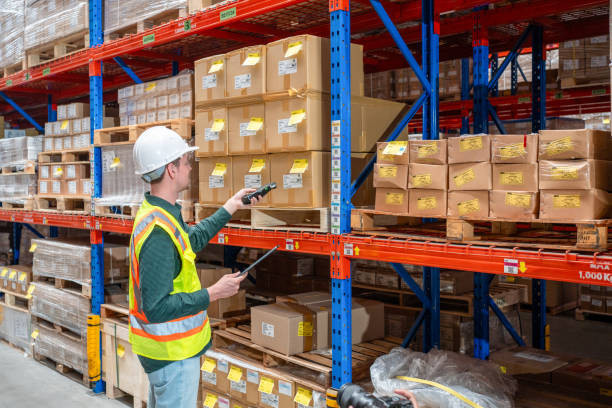
- Barcode handheld scanners
- RFID tagging
- Automated receipt and inventory verification
- Digital picking and replenishment instructions
- Integration with conveyor systems and automated storage
Using barcoding in the warehouse allows employees to quickly confirm product movement. Manual data entry is not required.
More advanced operations may benefit from integrating warehouse management system with automation within the warehouse. This can help move goods through the warehouse efficiently and reduce inefficiencies.
Depending on the size, complexity, and budget of your warehouse, different levels of automation may be required.
- Comprehensive Reporting and Analytics
Not only do businesses need to know what is in stock within their warehouse, but they also need data to improve efficiency. By having data, operations can be reviewed to identify inefficiencies, understand productivity, and make informed decisions.
A good warehouse management system should allow a variety of reporting to give insight into key metrics. These may include:
- Accuracy of inventory
- Accuracy of order picking
- Time to fulfil order
- Warehouse space utilisation
- Staff productivity
- Performance of receiving and dispatch
For example, identifying picking errors over time can highlight issues with processes so improvements can be made.
Advanced reporting can help businesses forecast demand, plan staff resources and continuously improve processes.
Choose a warehouse management system that provides useful insights from warehouse data, rather than just producing large amounts of reports.
- Scalability and Flexibility for Business Growth
As a business grows, the requirements of your warehouse may change. You may require to manage more warehouses, larger order volumes, new product ranges or complex fulfilment processes.
A scalable warehouse management system should allow for these changes to be made without you needing to completely change systems.
Consider if the warehouse management system can be scaled to suit:
- Multiple warehouses/distribution centres
- Increasing order/inventory volumes
- More users and roles
- New sales channels/fulfilment methods
- Customisable processes and rules
Cloud-based warehouse management systems may offer greater scalability in managing infrastructure. Depending on connectivity, security and integration requirements, this may be appropriate.
Choosing a scalable warehouse management system will allow you to get the most out of your technology and grow your business sustainably.
- Workforce and Task Management
Despite increasing automation, staff within warehouses are still very important. A warehouse management system should allow managers to assign tasks, manage staff workload, and manage overall operations effectively.
Consider if the warehouse management system can do the following:
- Prioritised task assignment
- Live workload view
- Staff productivity tracking
- Staff planning
- Activity/productivity reporting per activity/shift
If a large number of deliveries come into the warehouse unexpectedly, managers can use workload data to reorganise staff resources to avoid delays to operations.
Better task management within the warehouse means less idle time, balanced workloads, and increased productivity.
Ensure that the system is easy for staff to use to allow for consistent usage.
- Returns Management and Product Traceability
Returns are an important part of warehouse operations, particularly for retailers, e-commerce operations, electronic products, and regulated products.
Without structured processes in place, returned items may be placed incorrectly, restocked incorrectly, or have delays in checking.
A capable warehouse management system should allow for the following processes for returning goods:
- Authorisation and receipt of returns
- Inspection
- Update inventory status
- Decision on restocking, quarantining and disposal
- Tracing of batch and serial numbers
Being able to trace products is very important for investigating faulty items, managing warranty claims, and recalling products.
A warehouse management system with good tracing capabilities will allow for accurate inventory and increased accountability throughout the product life cycle.
- Security, Reliability and Vendor Support
A warehouse management system holds very important data within a business, including inventory, orders, and transaction records. If a system goes down, or data is lost/accessed inappropriately, it can cause disruptions within warehouse operations and impact customer commitments.
Before selecting a warehouse management system, consider how secure, stable, and supported the system is.
Important considerations include:
- User access by role
- User activity logs
- Data encryption and backup
- Disaster recovery/business continuity options
- Availability and performance of system
- Technical support provided by supplier
Also consider how experienced the supplier is in implementing the solution. Ask for customer references, training resources, and the service guarantees in place.
Even if a warehouse management system is technically advanced, it will not be valuable unless it can be implemented and supported well.
Choosing the Right Warehouse Management System for Your Business
Now that you understand the features of a warehouse management system, it is important to choose the right one for you. Rather than choosing a system based on having the most features, understand what is required for your business to achieve desired results.
Firstly, consider what issues you are facing in your warehouse. Are there issues with inaccurate inventory due to discrepancies? Are staff taking too long to find items? Is there delays due to separate systems?
Once you have identified the issues you face, you can define what requirements you have.
Prioritise which features are important for you. A small warehouse may have more immediate priorities around accurate inventory and barcoding, whilst a large distribution centre may require more advanced picking methods, automation integration, and multiple site management.
Consider the overall cost of the system. This includes any subscription/license fees, implementation, integrations, hardware requirements, training, and support.
Ask for a practical demo to see how the warehouse management system would perform in your warehouse. Ensure that it can handle receiving, inventory movement, picking, any issues, and delivery confirmation.
Finally, consider whether the implementation partner can support data migration, integration, staff training, and enhancements in the future.
The right system for your warehouse will allow improvements but should be manageable and cost-effective.
Why Choosing the Right Warehouse Management System Matters
Choosing the right warehouse management system for your business can improve how inventory, staff, and processes work as a whole.
Having a well-implemented warehouse management system can allow you to:
- Have accurate inventory
- Reduce manual processes and errors
- Fulfil orders quickly
- Improve warehouse space utilisation
- Coordinate your supply chain effectively
- Scale your business operations
However, to achieve these benefits, it is important that you choose software that matches your processes, is well integrated, and that staff are sufficiently trained.
Conclusion
When choosing a warehouse management system for your business, it is important to consider functionality, integration, scalability, costs, and future requirements. The top 10 factors outlined in this article can help you decide which warehouse management system is best suited for your business.
As supply chains become more complex, investing in the right warehouse management system can help businesses increase visibility within operations, improve efficiencies, and respond to changing business requirements.
Ultimately, the ‘best’ warehouse management system may not be the one with the most features, but the one that suits your processes, can be well integrated with your processes, and can support future growth.
Carefully considering your requirements and choosing a system that will bring measurable improvements can help create a more efficient, robust, and future-proof warehouse.