The digitisation boom of Southeast Asia and its associated challenges
One of the world’s biggest digital commerce expansions is now unfolding in Southeast Asia. An ever-accelerating pace in the region’s supply chains has been driven by China Plus One” policies and explosive growth in hyper-local and social commerce. This growth, though impressive, faces a hard reality: a rigid physical infrastructure grid and an insurmountable urban blockage.
Logistics providers operating in bustling conurbations like Greater Jakarta and Metro Manila or on the traffic-choked highways around Bangkok face a dual shocker: a double whammy of city gridlock and rapidly fluctuating, escalating prices for fuel.
Indeed, analyses indicate that in the region’s primary urban centres, traffic congestion alone costs the respective local economies between 2 to 5 percent of their annual GDP in the form of lost production time and wasted fuel. Transport companies, operating with the thinnest possible profit margins, can no longer sustain their existing operations through outdated and manual dispatching strategies. They are now being forced to navigate around this ‘logistics blockade’ with advanced digital solutions. Cutting-edge transport fleets are using a trio of potent technologies to transcend this blockade: a transport management system, which leverages route optimisation algorithms, as well as an electronic proof of delivery (ePOD) system.
Here is how this synergistic system helps overcome the specific transport difficulties experienced in Southeast Asia, reducing operating expenditures and ensuring flawless goods delivery.
Core Issue: Transit Friction Southeast Asian style
Before we can delve into the software mechanics, it is vital to first understand why traditional Western methods of logistics cannot simply be copied wholesale into this region. This is primarily due to three bottlenecks to physical operations that characterise the region:
- Chronic Urban Gridlock
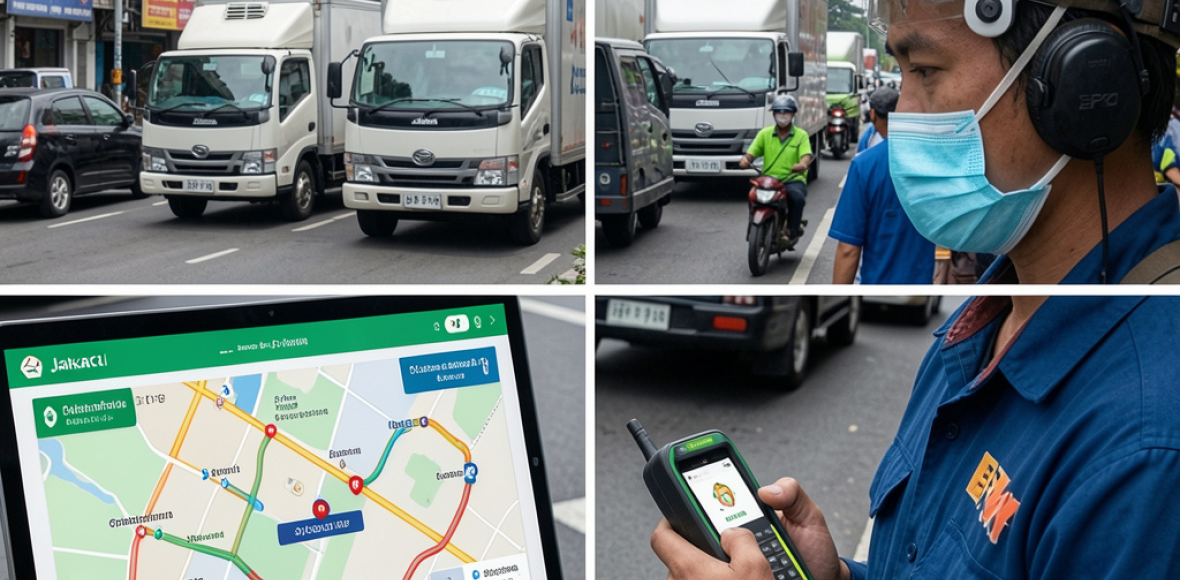
Many urban centres throughout Southeast Asia, including Manila and Jakarta, consistently show up in world rankings of major urban traffic hubs.
A journey as short as 20 kilometres can require between three to four hours to complete when commuting during peak periods. Fixed grids, with routes determined ahead of time, are simply unable to accommodate the sheer dynamism of traffic flows on a day-by-day basis.
- High Fuel Vulnerability
Global fuel markets are volatile to say the least, and the price of transportation fuel is now a direct risk to profitability across all fleets.
Many vehicles spend hours idling or are moving extremely slowly as they wait for traffic to clear, consuming significantly more fuel for every kilometre travelled than they should.
- High Levels of fragmentation and Cash Focus Last-mile deliveries in Southeast Asia largely depend on fragment operations and informal networks: subcontracted carriers, bicycle and motorcycle couriers, and delivery against cash payments at the door (COD). The security, and indeed the efficient functioning, of the system requires the management of huge volumes of physical cash and paper receipts for thousands of individual deliveries every day.
Pillar 1: optimisation of routes against traffic jams and fuel prices
This modern transport planning process relies heavily on state-of-the-art route optimisation software.
This avoids reliance on intuition alone or fixed distribution networks, instead utilizing large datasets, which a machine processing thousands of data points per second will compile into the optimal delivery itinerary.
[Raw Order Pool] ──> [Machine Learning Routing Engine] ──> [Optimised Manifests]
│ │ │
(Real-time Traffic) (Time-Window Rules) (Maximised Vehicle Cube)
- Dynamic Traffic Window Integration: The algorithm takes into consideration historic and near real-time traffic jam information rather than the short distance alone in terms of optimising the shortest transit time. It makes the vehicle plan to dispatch delivery to the downtown business zones during low-traffic durations and divert its journey from traffic bottleneck corridors during peak hours of traffic congestion.
- Micro-Fulfillment Designs with Multiple Stops: With brands decentralising logistics hubs through micro-fulfilment in order to deliver closer to the consumers (e-commerce logistic business model), the journey now has transformed from limited large delivery stops to numerous hyper-localised stops.
The delivery optimisation engine aggregates several orders at particular locations. Thus, the vehicle is able to visit each stop once and avoid going back to areas with traffic congestion multiple times.
- Vehicle Type Restrictions: Several cities in Southeast Asian countries regulate by specifying restrictions on zoning for heavy commercial vehicles and time-of-day movement prohibition for such vehicles in restricted areas.
Modern optimisation engines can smartly incorporate these constraints and route heavy loads outside strict regulations and use light vehicle types in such restricted zones. There is a wide range of immediate financial benefits that this application provides. By organising the routes properly, vehicles travel a 15-20% reduced mileage that directly leads to fuel savings and less wear and tear of the vehicle.
Pillar 2: ePOD (electronic Proof of Delivery)—Eliminating Paper and Cash friction
From the moment that a delivery has arrived at its destination up to the last moment that a signature is obtained, the second weakest link is usually observed on that delivery document stage, and this is a typically traditional, very paper-based process of the previous days.
And we will see how ePOD (electronic proof of delivery) can save the day in terms of solving the problems of this crucial bottleneck stage: In manual processes and procedures, this signature document, which could get lost or have an illegible signature, leads to payment delays of up to weeks due to its long and tedious process, and also the transport company’s capital is held up.
Instead, ePOD offers this in minutes. A number of critical functions a present-day ePoD system should contain are the following:
Multi-modal verification: the drivers on the ground could in real time capture digital signatures, photos of the delivered items with time and location stamping of all delivery events, and barcode scanning and verification of item identity at the customer’s point.
Discrepancy Logging: If an item or a part of the consignment has been delivered, rejected, or damaged, the driver will immediately record the exception on his mobile device by attaching a photo and initiate a return in the system.
Digital COD Management: For the cash-on-delivery-based transactions, a modern ePoD solution can be securely connected to the local digital wallet and QR code payment solutions, for example, QRIS in Indonesia or QR PH in the Philippines, or manually record physical cash transactions through the system.
Pillar 3: The Connected Transport Management System—The Operational Nervous System
While optimisation will plan the path and ePOD will capture the validation, all processes will be monitored in a single transport management system—from procurement to dispatch through tracking and final payment reconciliation.
| Feature Area | Legacy Transportation Model | Modern Connected TMS Stack |
| Fleet Dispatching | Manual calls, WhatsApp coordination, and paper manifests. | Automated, one-click digital dispatch directly to driver mobile apps. |
| Visibility | “Blind transit”—relying on drivers to answer status calls. | Real-time GPS tracking with dynamic, automated ETA alerts for customers. |
| Freight Auditing | Manual calculation of 3PL invoices against paper receipts. | Automated billing, fuel surcharge tracking, and driver payout reconciliation. |
A transport management system that is API-first is an integration bridge; it ingests order information directly from WMS and ERP systems, pumps the data to the routing engine, tracks live truck movements through GPS, and updates customer account records when an ePOD status change occurs. This negates the need for manually entering data, breaks down data silos, and enables your managers to be able to address any exception as and when the exception occurs before it touches the end customer.
Quantifiable ROI: What a Unified Digital Architecture Delivers
The interconnected transport management system, route optimisation, and ePODs together offer undeniable bottom-line benefits to the overall supply chains in any corporation.
┌──────────────────────────────────────────────┐
│ Typical Performance Gains from Digital TMS │
└──────────────────────────────────────────────┘
Fleet Fuel Consumption ▼ 15% – 20%
────────────────────────────────────────────────
Last-Mile First-Time Success ▲ 12% – 18%
────────────────────────────────────────────────
Customer Support Call Volume ▼ 40%
────────────────────────────────────────────────
Billing Cycle (Days to Invoice) 3-5 Days ──> Instant
- Drastic Reduction in Fuel and Maintenance Costs
Every moment your delivery vehicle is running empty between destinations (the infamous ‘deadhead’ kilometre) or idling while drivers take a break, the miles and fuel drain from your budget at a clip. Using software to dynamically reroute around known congestion and minimize stops not only cuts this waste but, over time, also reduces vehicle wear and tear to shave even more off the bottom line.
- Maximized Fleet Utilisation
A sophisticated, cloud-based transport management system goes further than just the route on the map; its ‘cube optimisation’ features meticulously plan the loading of your vans and trucks based on individual parcel weights and dimensions and vehicle cube capacities to ensure you’re not shipping air. If you are, then your vehicles aren’t running nearly efficiently as they could, leading to higher shipping costs per unit and the potential to invest in vehicles or third-party logistics providers you may not really need.
- Elevated Customer Retention
With consumers and businesses demanding better service than ever before, delivery is often the single point of interaction that most impacts whether a customer will buy again.
An intelligent transport management system delivers transparent tracking to the customer’s phone or email, along with traffic-adjusted, accurate delivery times.
And when real-time information means fewer late deliveries and even the nearly elimination of delivery disputes (supported by electronic proof of delivery—ePOD), customer confidence flourishes.
The Strategic Path Forward
Addressing the Infrastructure Issue Southeastern Asia’s roads and traffic aren’t likely to improve dramatically overnight. Urban populations continue to grow, and it will be some time before we build the infrastructure to keep pace.
But that shouldn’t mean that companies in the transport industry must simply accept current conditions as fixed. Taking a bold digital approach with a cloud-based transport management system and automated routing tools can help to leapfrog many of the physical challenges impacting operations and ensure efficient and reliable deliveries even when roads are congested or simply don’t exist.
« How an Order Management System can Transform the Order Management ExperienceEmpowering Indonesia SMEs through Digital Innovation »