
Vietnam’s e-commerce industry keeps expanding , but rapid growth alone doesn’t ensure companies will survive. Ninja Van exited Vietnam’s express delivery sector, and Flex Speed (LEX) pulled out of last-mile delivery, pointing to bigger structural challenges in the market. A few powerful platforms now dominate demand, control prices, and set service expectations, which puts logistics companies in a tough spot. Business Times called this phase a time of consolidation after years of aggressive growth. They highlighted that “concentration risk” has become a critical concern for logistics firms relying on platform-driven parcel volumes. LEX informed partners that it plans to end last-mile delivery services by 31 March 2026 to restructure its strategy.
This shift stands out because it is unfolding in one of the fastest-growing e-commerce markets in Southeast Asia. Vietnam Briefing referencing VECOM data reported that Vietnam’s e-commerce sector hit US$32 billion in 2024, showing a 27 percent increase from the previous year. Online retail reached US$22.5 billion, making up about 12 percent of all retail sales. As e-commerce grew, logistics followed suit, with total postal output hitting an estimated 3.2 billion parcels in 2024. Out of these 2.4 billion parcels were deliveries tied to e-commerce. By 2025, the top four online platforms together generated around VND429. The gross merchandise value reached 7 trillion, roughly equal to US$16 billion, which shows demand remains strong.
The same numbers also explain why the market has gotten so unforgiving. By 2025, Shopee and TikTok Shop made up 97 percent of the big platform market. Shopee took around 56 percent while TikTok Shop grabbed over 41 percent. Lazada and Tiki combined managed to secure just 3 percent. With so many orders flowing through these two platforms, logistics companies that don’t control their own demand face big risks. They might get pressured to lower prices or meet stricter service expectations or struggle if a major platform switches partners, creates its own logistics network, or redirects parcel deliveries. The true meaning of “last-mile war” in Vietnam goes beyond rushing to deliver packages. It is a fight over who manages the flow of orders driving those deliveries.
The next stage of competition in Vietnam isn’t just about solving logistics issues. It’s a bigger challenge involving systems. A company might own warehouses and riders’ sorting hubs and work with carriers, but failing to coordinate orders across sellers, inventories, channels, and delivery methods could harm profit margins. With the market being so tightly packed, companies have to find ways to make each order more adaptable, easier to track, and less tied to one platform or delivery service. This shows why the order management system plays such a key role.
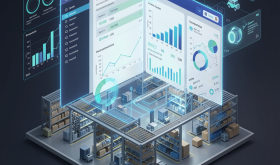
An order management system does more than just handle order processing. Manhattan Associates calls it a platform that oversees the full order lifecycle, including inventory, fulfillment, shipping, customer service, and returns. IBM explains it as real-time fulfilment across various channels and locations, and Oracle defines it as an end-to-end system that organises order workflows across many systems. In practical terms, an OMS acts as the control tower between customer demand and execution. It provides a single spot for businesses to check orders, stock levels, fulfilment choices, and delivery promises instead of managing these decisions across systems like marketplaces, ERPs, warehouses, or shipping carriers.
In Vietnam today, the biggest benefit of using an order management system lies in carrier diversification. A market dominated by a handful of big platforms sees logistics providers entering or leaving certain areas. Merchants and brands can’t afford to rely on one delivery system. By using rules-based orchestration, an order management system helps route orders to carriers depending on service quality, region, capacity, profit potential, or even failure risks. IBM explains this as intelligent brokering and cross-channel order management, while Oracle’s and Y3’s order management systems focus on dynamic fulfilment and real-time updates. For sellers in Vietnam, this means they can assign an order to the most suitable carrier each day instead of sticking to yesterday’s default choice.
The second benefit involves improving inventory accuracy and making better promises. Last-mile networks become costly when orders are sent from incorrect locations or at the wrong times. Y3 emphasises a single reliable available-to-promise view, while Oracle’s retail tools prioritise real-time inventory tracking to pick the best fulfilment spot. This is a big deal in Vietnam’s unpredictable market. Sellers often use marketplaces, direct channels, and social commerce all at once. An order management system helps avoid overselling, reduces scattered stock, and figures out if an order should ship from a store, warehouse, or another point. This boosts customer trust and keeps costs manageable.
The third perk is handling exceptions, which matters more as the market keeps consolidating. When a courier doesn’t pick up, a sort centre gets backed up, or a carrier leaves a segment, sellers shouldn’t have to fix everything. Order management system platforms exist to track orders live and let companies adjust, reroute, or monitor them on the fly. IBM says users manage orders from all channels and tweak processes as needed, while others emphasise alerts for real-time inventory updates for orders and alignment with transport plans. The order management system helps businesses deal with logistical hiccups without dumping that mess onto the customers.
Vietnam has regulatory reasons to prioritise order management system capabilities in the coming years. The market is consolidating while governance is also becoming stricter. Reports on the 2025 platform market showed fewer active sellers as competition grew and action against fake and low-quality goods increased. By July 2026 new e-commerce rules will assign strict responsibilities to sellers, live streamers, and platform operators, including requiring sellers to verify their identities using VNeID. In this scenario, scattered order data can become a big problem. A reliable order management system offers a single clear record of orders, inventory, fulfilment, and customer communications. This can help businesses trace activities better and act during audits, disputes, or issues with service.
The lesson from Ninja Van and LEX’s retreat is therefore not simply that Vietnam’s last-mile market is too competitive. It highlights that growing bigger without proper coordination can lead to weaknesses. In Vietnam’s e-commerce scene future leaders won’t just have massive delivery fleets. They’ll excel at managing order flow, tracking inventory, handling deliveries, and keeping customer promises. While last-mile delivery still plays a role, it’s becoming clear that the choices made earlier in the digital ordering process hold greater importance. Vietnam’s e-commerce battle in the future won’t just be about roads and deliveries. It will pivot towards the systems managing everything above the road. Among these systems, the order management system could stand out as the key advantage.
« Navigating Middle East Turmoil: How Warehouse Management Systems Protect Supply ChainsThe Iron Silk Road Reborn: How a Transport Management System Will Power Cambodia’s Railway Modernisation »