An Order Management System is software for managing and coordinating the entire order lifecycle, including everything from order capture and inventory allocation to fulfilment, delivery, returns, and reporting. It ties together sales channels, inventory silos, warehouses, carriers, enterprise systems, and customers.
An order management system makes it easier for retailers, manufacturers, wholesalers, e-commerce sellers, and logistics providers to gain complete visibility and control over increasingly complex order processes. It can help in processing orders correctly and selecting the best possible fulfilment option while keeping customers informed at every stage of the delivery journey.
What Is an Order Management System?
An order management system is a technology platform for capturing, processing, tracking, and fulfilling customer orders across multiple channels. These channels can include e-commerce sites, online marketplaces, physical stores, mobile apps, sales representatives, B2B portals, electronic data interchange (EDI), social commerce, etc.
Instead of managing orders in multiple spreadsheets, emails, sales systems, and warehouse applications, an order management system acts as a centralised system of record. Modern order management system platforms typically cover the complete end-to-end order lifecycle, from order capture through to payment, inventory checks, fulfilment, shipping, delivery, cancellation, exchange, and return.
Simply put, an order management system solves these four basic questions:
- What did a customer order?
- Is the product available?
- Where should the order be fulfilled?
- How can it reach the customer efficiently?
An order management system is particularly important for businesses that have multiple sales channels, warehouses, stores, suppliers, or 3PLs. It is the orchestration technology needed to tie the whole distributed fulfilment network together.
How Does an Order Management System Work?
An order management system usually comprises a series of connected processes.
- Order capture
The order management system gets orders from various sales channels and transforms them into a common format that can be processed by downstream systems. It captures essential elements like customer, products, quantities, prices, deliverable address, payment terms, shipping preferences, and delivery window.
This helps in keeping sales teams away from switching between systems to look up order information and avoids manual data-entry mistakes.
- Order validation
Prior to any order processing, the order management system validates whether the order information is complete and accurate. Depending on the business rules, it can check for payment status, delivery addresses, product availability, customer eligibility, price, discounts, taxes, or fraud-related issues.
Orders that require additional review can be marked for manual intervention instead of going directly to fulfilment.
- Inventory visibility and allocation
The order management system identifies inventory across warehouses, stores, distribution centres, suppliers, and other sources of stock. It may use available, allocated, consigned, on-order, safety stock, warehouse capacity, and delivery commitments to ensure that the right items are available when needed.
This helps in avoiding oversales while maintaining accurate stock visibility for customers.
- Fulfilment routing
Once the order management system has identified what inventory is available, it determines where the order should be fulfilled. It can use proximity, speed of delivery, cost, warehouse capacity, inventory availability, customer prioritization, or product-specific rules to do this.
For example, an order can be routed to the nearest warehouse, retail store, 3PL, or a drop-shipping supplier. It can also support various fulfilment choices like ship-from-store, buy online and pick up in store (BOPIS), split-shipments, and back-orders.
- Warehouse and transportation coordination
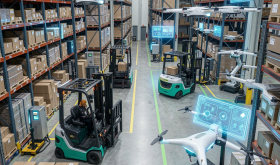
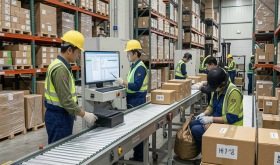
The order management system sends instructions to the appropriate warehouse management system (WMS), store, supplier, or 3PL. Once the order is picked, packed, and shipped, it sends back status updates to the order management system.
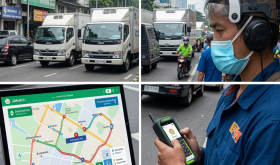
The order management system may interface with a transportation management system (TMS), carrier platforms, and delivery partners to handle carrier selection, shipment creation, tracking, and delivery notifications.
- Customer communication and returns
During the order lifecycle, the order management system can also trigger customer notifications for order placement, payment, fulfilment, dispatch, delayed delivery, and any returns.
It can aid with authorisation of returns, exchanges, refunds, inspection of returned goods, and return of goods into stock creating a better post-purchase experience for customers.
Key Features of OMS Software
While features can vary from one vendor to another, most modern order management systems comprise the following:
- Centralised management of orders across channels
- Real-time or near-real-time visibility of inventory
- Allocation and reservation of inventory
- Automatic routing of fulfilment
- Support for multiple warehouses and locations
- Split-order and partial shipment management
- Backorder and pre-order processing
- Payment and fraud-check integrations
- Carriers, shipping, and tracking integrations
- Returns, refunds, and exchange workflows
- Customer and internal order-status updates
- Exception management and workflow automation
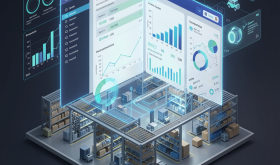
- Order performance reports and analytics
- APIs, EDI, and pre-built integrations with business systems
Some order management system platforms also provide distributed order management (DOM) capabilities where a rule- and data-driven system uses information coming into the order management system to determine how and where an order should be sourced and delivered. This is ideal for organisations using distributed inventory across stores, warehouses, dark stores, suppliers, and 3PLs.
Benefits of an Order Management System
Improved order accuracy
An order management system reduces the manual processing of orders by automatically sending information between related systems. Standardised order-processing workflows can help eliminate mistakes around product details, delivery address, inventory allocation, and shipping instructions.
Faster fulfilment
Automation helps route orders to the most suitable fulfilment location without the manual intervention of representatives checking each order. This reduces processing delays and accelerates delivery turnaround time.
Better inventory control
Having a centralised view of available stock helps teams balance what is available, where the stock is, and whether it has been allocated already. Enhanced order accuracy helps reduce overselling, stockouts, back-orders, and transfers of unwanted inventory.
Lower operational costs
With automated order processing and intelligent routing, an order management system can reduce administrative costs. It helps avoid costly exceptions, reduces the need to ship unfulfilled or returned goods, and can find ways to save on delivery charges, warehousing, and other costs.
Stronger customer experience
Customers nowadays are expecting consistent order accuracy, range of delivery options, good tracking information, and simple processes for returns and exchanges. An order management system delivers on this with the seamless information flow that it provides throughout the customer’s order lifecycle.
Scalable omnichannel capabilities
As businesses grow, they tend to open new marketplaces, stores, websites, regions, and fulfilment partners. An order management system creates a single view of all these new sales outlets, making it easier to manage order data from these sources without creating additional information silos.
OMS vs ERP, WMS, and TMS
An Order Management System (OMS) does not typically replace other enterprise systems but rather complements them. Each has different functions and responsibilities within the organisation.
An ERP, or enterprise resource planning system, covers finance, procurement, master data, and wider business processes.
A WMS, or warehouse management system, deals with day-to-day warehouse operations such as receiving, putaway, picking, packing, stock movements, and dispatch confirmation.
A TMS, or transportation management system, covers carrier selection, pricing, routes, tendering, tracking, and freight payment.
The focus of an OMS is the customer order and the decision-making around order processing and fulfilment. It receives orders from sales channels, performs allocation and routing, and shares this information with downstream systems such as the WMS, TMS, and ERP. In a connected logistics technology stack, the OMS can send instructions to the WMS, exchange shipment data with the TMS, and pass financial information to the ERP.
How to Choose an Order Management System
An order management system can have tremendous business benefits, but it is important to select one that matches an organisation’s current needs and future targets. Businesses may wish to ask the following questions before choosing an order management system:
- Does the platform support all current and planned sales channels?
- Can it handle multiple warehouses, stores, suppliers, and 3PLs?
- Does it provide accurate visibility of inventory?
- Can users customise allocation and routing rules without complex coding?
- Can it integrate easily with the existing ERP, WMS, TMS, e-commerce, and carriers?
- Can it handle cancellations, returns, exchanges, split-shipments, and back-orders?
- Does the platform provide dashboards, alerts, audit trails, and performance analytics?
- Can it scale across new products, markets, and fulfilment nodes?
- Does the vendor provide good implementation, training, security, and service support?
An order management system should support a business’s particular operating model rather than focusing on providing the largest list of features. It can be important to weigh up implementation complexity, potential data-quality risks, integration costs, user adoption, and overall cost.
An order management system provides organisations with a single source of truth for capturing, coordinating, fulfilling, and monitoring orders. By tying together sales channels and tying this information to inventory, warehouses, carriers, and customers, order management system helps in delivering better order accuracy, lower costs, and stronger customer experiences – something that is now essential in today’s digital world.
« Warehouse Management System: Optimising Inventory, Operations and LogisticsHow a Transport Management System Optimises Your Processes and Reduces Costs »